
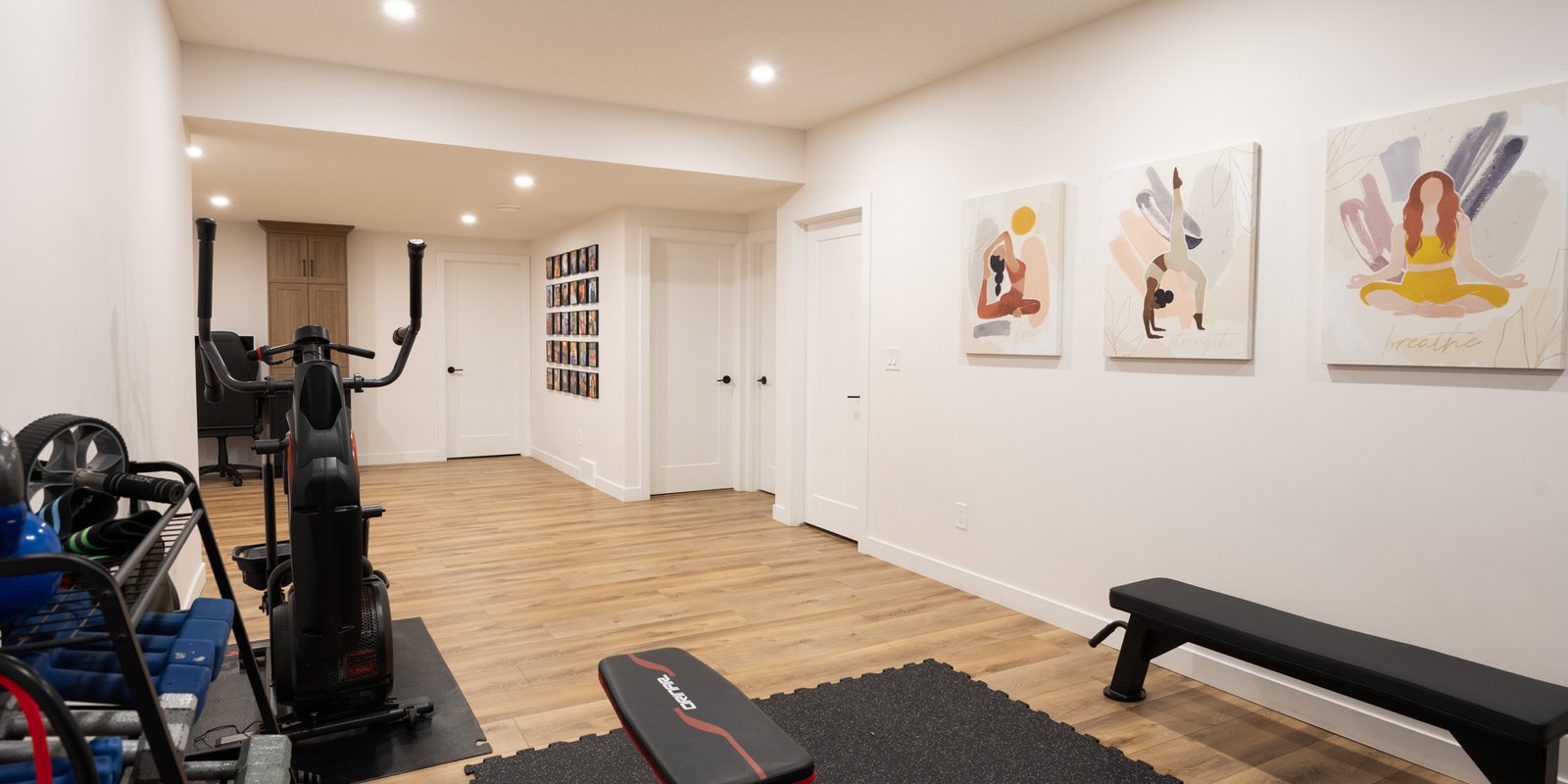
If you're planning basement renovation permits, Strathmore has a clear process you need to know before developing your existing basement into a functional living space. The Town of Strathmore follows Alberta's building codes, and skipping the right steps can end up costing you far more than the paperwork ever would. This guide covers exactly what permits you need, what inspections are involved, and what your project will realistically cost in 2026.
Why Permits Matter for Basement Renovation in Strathmore
The Alberta Safety Codes Act Makes Building Permits a Legal Requirement
A building permit is not optional when you're finishing or renovating a basement in Alberta. Under the Alberta Safety Codes Act, any construction that involves structural changes, new rooms, electrical work, or plumbing requires a permit before work begins; it is the law. This applies whether you're adding a bedroom, a bathroom, or converting your existing basement into a legal secondary suite.
Permits exist to make sure the work is done safely and to a standard that protects you, your family, and anyone who buys your home later. Think of it as the Town's way of making sure your new living space is built to last.
What Happens to Strathmore Homeowners Who Skip Permits
Skipping permits might seem like a shortcut, but the consequences can be serious. If an unpermitted renovation is discovered during a home sale, insurance claim, or inspection, you may be required to open up walls, undo completed work, and redo it under permit. Your home insurer could also deny a claim tied to unpermitted construction.
Beyond the financial hit, unpermitted work can affect your property's resale value. Buyers and their lawyers look for permits. If there's no record of permitted work, that becomes a negotiating point or a dealbreaker. Getting it right from the ground up is far less stressful than dealing with it later, and in most cases, the permit process is more straightforward than homeowners expect.
A Building Permit Is Valid for One Year from the Date of Issuance
Once your building permit is approved, you have one year from the issuance date to complete the work. If your project is delayed for any reason, you need to request an extension in writing before the permit expires. Planning your schedule around this timeline helps you avoid the extra cost and hassle of reapplying.
What Permits Do You Need for Basement Development in Strathmore?
Most basement renovations in Strathmore require more than one permit, depending on the scope of the project. Here is a clear breakdown of what applies to most developments.
The Building Permit
A building permit is required for all basement developments that involve framing new rooms, structural changes, adding a bathroom, or finishing an existing basement space. It covers the physical construction of your project, including framing, insulation, vapour barriers, and ceiling height compliance. The Alberta Building Code sets a minimum ceiling height of 1.95 meters for habitable basement rooms, and this is one of the items reviewed during the permit process.
The Electrical Permit
Any time new circuits, lighting, or wiring is installed in your basement, a separate electrical permit is required. This applies to everything from adding pot lights to wiring a new panel circuit for a wet bar or home office. The electrical permit ensures the work is reviewed and signed off by a qualified safety codes officer.
The Plumbing Permit
If your basement renovation includes installing a bathroom, connecting to existing drain lines, or adding a utility sink, you need a plumbing permit. This is a utility permit that covers the installation and connection of plumbing fixtures. It applies to both full bathrooms and simpler additions like a laundry rough-in or sump pump work.
The Development Permit
A development permit is only required when your project changes the land use of the property. In practical terms, this refers to building a legal secondary suite on the city's land use zoning for your property. A secondary suite is treated differently because it creates a separate dwelling on the same property, which affects zoning and the town's land use classification for your residence. Standard basement renovations for personal use typically do not require a development permit.
What the Town of Strathmore Requires in Your Permit Application
The Floor Plan Drawing
Your permit application must include a floor plan drawing that shows the layout of the basement, including room dimensions, window placement, door locations, and the proposed use of each space. The drawing does not need to be architect-grade, but it does need to be clear and accurate. Many homeowners work with their contractor to prepare this, or hire a draftsperson for more complex layouts.
For a secondary suite, the drawing requirements are more detailed and typically include fire separation specifications and separate entry points.
Framing Requirements the Town Checks at the Pre-Drywall Inspection
Before drywall goes up, the Town requires a framing inspection. At this stage, the inspector checks that all framing meets Alberta Building Code standards, that proper insulation and vapour barriers are in place (typically a 6-mil polyethylene vapour barrier against concrete walls and floors), and that pressure-treated framing is used where wood contacts concrete.
This inspection must be booked and passed before any drywall installation begins. Work that proceeds without this inspection may need to be uncovered for review.
Smoke Alarms and Carbon Monoxide Detectors
For any basement bedroom or sleeping area, the Alberta Building Code requires interconnected, hard-wired smoke alarms and carbon monoxide detectors. These must be installed in all sleeping areas and on every storey of the home. The alarms need to be interconnected, meaning that when one sounds, they all sound. This is a standard inspection item and must be in place before the final walkthrough.
Egress Window Requirements for Basement Bedrooms
Every basement bedroom requires an egress window. An egress window is a window large enough for a person to escape through in an emergency. The clear opening must be at least 0.35 square meters, and the window must meet minimum width and height dimensions as well. Without a compliant egress window, the room cannot legally be called a bedroom, and the permit will not pass final inspection.
The Two Required Inspections for Strathmore Basement Development
The Town of Strathmore coordinates safety code reviews and inspections through Park Enterprises Ltd. You will deal with them directly for scheduling both of the required inspections.
The Framing Inspection
The framing inspection takes place after all framing, insulation, vapour barriers, rough-in plumbing, and rough-in electrical work are complete, but before any drywall is installed. The inspector needs to see the structure of the space clearly. All mechanical, electrical, and plumbing rough-ins must be accessible at this stage.
Book this inspection only when everything is ready. Incomplete work at the time of inspection can result in a failed inspection and a rescheduling fee.
The Final Inspection
The final inspection takes place when all construction is complete, and the basement is finished to its functional areas. This includes flooring, drywall, paint, lighting fixtures, plumbing fixtures, door and staircase installation, smoke alarms, carbon monoxide detectors, and egress windows, covering all the final touches before sign-off. The inspector walks through the entire space and signs off that the work meets code. Only after this sign-off is your permit officially closed.
How Much Does a Basement Renovation Cost in Strathmore in 2026?
Basement renovations in Strathmore generally range between $20,000 and $60,000, depending on the size of the space, the scope of the work, and the quality of finishes. Here is how the numbers typically break down.
Basic Open-Concept Development with No Bathroom
A basic open-concept basement development, covering framing, insulation, drywall, flooring, and lighting with no bathroom, is the most affordable starting point. For most Strathmore homes, this type of project runs between $20,000 and $30,000. It is a cost-effective option for families who want additional usable space, such as a rec room or home office, without the added price of plumbing.
Full 1,000 sq ft Development with a Bathroom
A full basement development covering roughly 1,000 square feet, including a bathroom, a bedroom, and a finished common area, is what most Strathmore homeowners are looking for. This type of project averages between $35,000 and $50,000. Adding a wet bar to this scope adds $5,000 to $15,000, depending on the fixtures and finishes chosen.
Legal Secondary Suite
A legal secondary suite is the most investment-heavy option, but it also offers the strongest long-term financial return. Secondary suites require fire separation, a development permit, a separate entrance, and a full kitchen, all of which add to the cost. Expect to budget $50,000 to $60,000 or more for a well-executed basement renovation that meets every requirement for a legal suite. For larger basements, costs can go higher depending on layout complexity and custom skilled trade work requirements.
Older homes may also face higher renovation costs due to existing issues like outdated electrical panels, insufficient heating supply, or waterproofing problems that need to be addressed before finishing work can begin.
Permit and Drawing Costs
Permit fees and drawing costs are line items many homeowners overlook in their initial budget. Building permit fees in Strathmore are calculated based on the construction value of the project. Drawing fees, if you hire a draftsperson, typically range from $500 to $1,500 for a standard basement layout. Electrical and plumbing permits carry their own separate fees. Factor these into your total budget from the beginning to avoid surprises.
Why Every Budget Needs a 10 to 15% Contingency
No basement renovation is entirely predictable. Unexpected issues behind walls, under floors, or within older homes can surface once work begins. A contingency budget of 10 to 15% of your total project cost gives you room to address these without stopping the project or compromising on quality. On a $40,000 project, that means setting aside an additional $4,000 to $6,000 as a buffer.
How Basement Builders Handles Permits for Strathmore Homeowners
Working with Basement Builders means you are not navigating the permit process on your own. Their team has direct experience with the Town of Strathmore's requirements and handles the process from beginning to final sign-off.
Permit Applications Prepared and Submitted on Your Behalf
Basement Builders prepares and submits every required permit application for your project. This includes the building permit, electrical permit, and plumbing permit, along with the floor plan drawings the Town requires. If your project involves a secondary suite, they handle the development permit application as well. You do not need to visit the Town office or figure out which forms apply to your project.
Inspections Scheduled and Managed by the Team
Basement Builders schedules and coordinates both the framing inspection and the final inspection with Park Enterprises. They ensure the work is at the correct stage before each inspection is booked, which reduces the risk of a failed review. You are kept informed throughout the process without having to manage the scheduling yourself.
Every Project Starts with a Free In-Home Assessment
Before any numbers are discussed or any work is planned, Basement Builders visits your home in person for a free quote and assessment, so your expectations are set clearly from the start. This is not a phone estimate based on square footage. It is a real walkthrough of your existing space with a team member who understands what your basement needs, what permits apply, and what your renovation will realistically cost.
If you are also comparing options in nearby communities, Basement Builders works across the region, including Calgary, Airdrie, Cochrane, Okotoks, and Chestermere. You can refer to their recent projects to get a clear picture of the quality and finish you can expect for your own home.
Basement Renovation Permits, Strathmore - FAQs
Common FAQS about Strathmore Basement Renovation Permits:
Do I need a permit to renovate my basement in Strathmore, Alberta?
Yes. Most basement renovations in Strathmore require at least a building permit and additional permits for electrical and plumbing work. The only exceptions are minor cosmetic updates that do not involve any structural, electrical, or plumbing changes.
What happens if I renovate my Strathmore basement without a permit?
You may be required to open walls, undo completed work, and redo it under permit. Unpermitted renovations can also affect your home insurance coverage and create complications when you sell your property.
How long is a Strathmore basement building permit valid for?
A building permit in Strathmore is valid for one year from the date of issuance. If your project runs longer than expected, you must request an extension in writing before the permit expires.
What is an egress window, and do I need one in my Strathmore basement?
An egress window is a window large enough for a person to escape through in an emergency. You need one in every basement bedroom. The clear opening must be at least 0.35 square meters to meet Alberta Building Code requirements.
How much does a basement renovation cost in Strathmore in 2026?
Most Strathmore basement renovations fall between $20,000 and $60,000. A basic open-concept finish starts around $20,000 to $30,000, while a full development with a bathroom typically runs $35,000 to $50,000. A legal secondary suite generally starts at $50,000 and up.
Who carries out basement development inspections in Strathmore?
The Town of Strathmore coordinates safety code reviews and inspections through Park Enterprises Ltd. They handle both the framing inspection and the final inspection for basement development projects.
Do I need a development permit for a standard basement renovation?
No. A development permit is only required when your project involves a change in land use, such as building a legal secondary suite. Standard basement renovations for personal use require a building permit, not a development permit.
Can I add a wet bar to my basement without a permit?
If the wet bar requires new plumbing connections, a plumbing permit is required. If it includes new electrical circuits or lighting, an electrical permit applies as well. Any structural changes would also fall under the building permit.